BuyCatnip / Scratching
Scratching posts and cat trees
Cats scratch to keep their claws in shape and to leave their scent. The right post, in the right spot, saves your sofa.
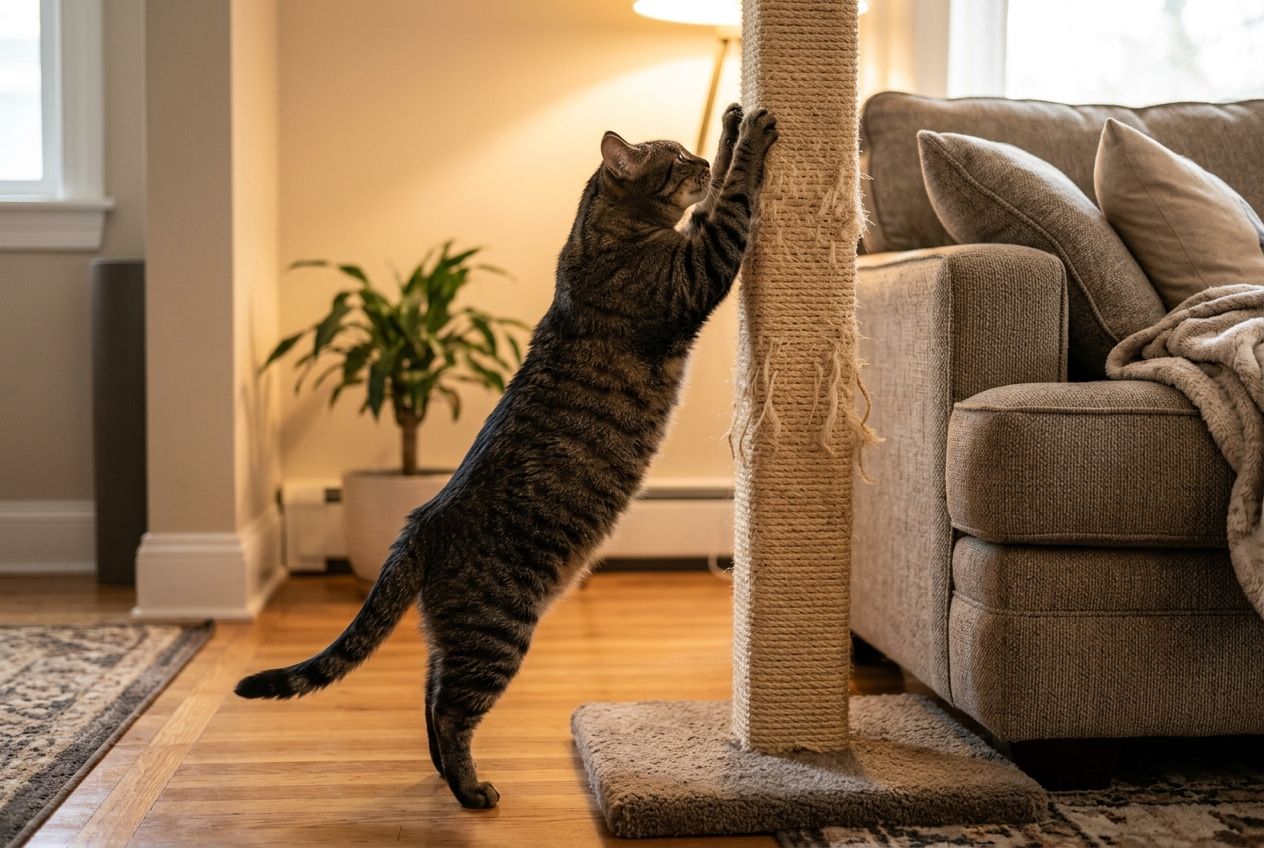
How tall should the post be?
Measure your cat once: let it stretch up against a wall or a door frame (a treat held high helps), and note the height of its front paws.
Without the form: the scratching surface must reach at least as high as your cat's paws at full stretch, and a cat that scratches carpets wants a flat scratcher too.
Placement beats price
The best post is the one next to the spot your cat already uses. Put it right there, even if it looks odd, and a second one near where your cat sleeps. Once the cat uses it, you can move it a little at a time.
Several cats
- Spread several posts around the home rather than one shared spot.
- Give at least as many safe resting places as you have cats.
- A tall cat tree with perches gives each cat a place to watch from.
Good to know
- Scratching is normal: it keeps the claws in good condition and leaves a scent from glands in the paws.1,2,3
- An upright post should be at least as tall as the cat standing on its hind legs with its front legs stretched out, and steady enough not to wobble or tip over.1,2
- Cats have a favorite direction: a cat that scratches carpets may do better with a flat scratcher on the floor.1,2,3
- Put a post right next to the spot your cat already scratches, and one near where it sleeps: cats often stretch and scratch when they wake up.1,2,3
- In a home with several cats, give at least as many safe resting places as there are cats, and spread several scratching posts around the home.2,3,4,5
- A high perch gives a cat more space and a place to watch from, and it can help several cats keep out of each other's way.3,5
How we checked this page
Checked on October 20, 2026. We kept a fact only when two independent publishers agree, and each one is numbered to its sources below. Where sources give different numbers, we keep only what they share. We never write a price. This page was written with an AI assistant and checked against the sources below.
Sources
- Feline Behavior Problems: Destructive Behavior, Cornell Feline Health Center
- Scratching, Cats Protection
- AAFP and ISFM Feline Environmental Needs Guidelines, AAFP and ISFM
- Feline Environmental Needs Guidelines, VCA Animal Hospitals
- How to Create a Harmonious Multi-Cat Household, Battersea Dogs and Cats Home