BuyCatnip / Carrier
Choosing a cat carrier
A good carrier is the difference between a calm trip and a fight at the front door. Size it to your cat, pick one that opens from the top, and let your cat live with it before the day you need it.
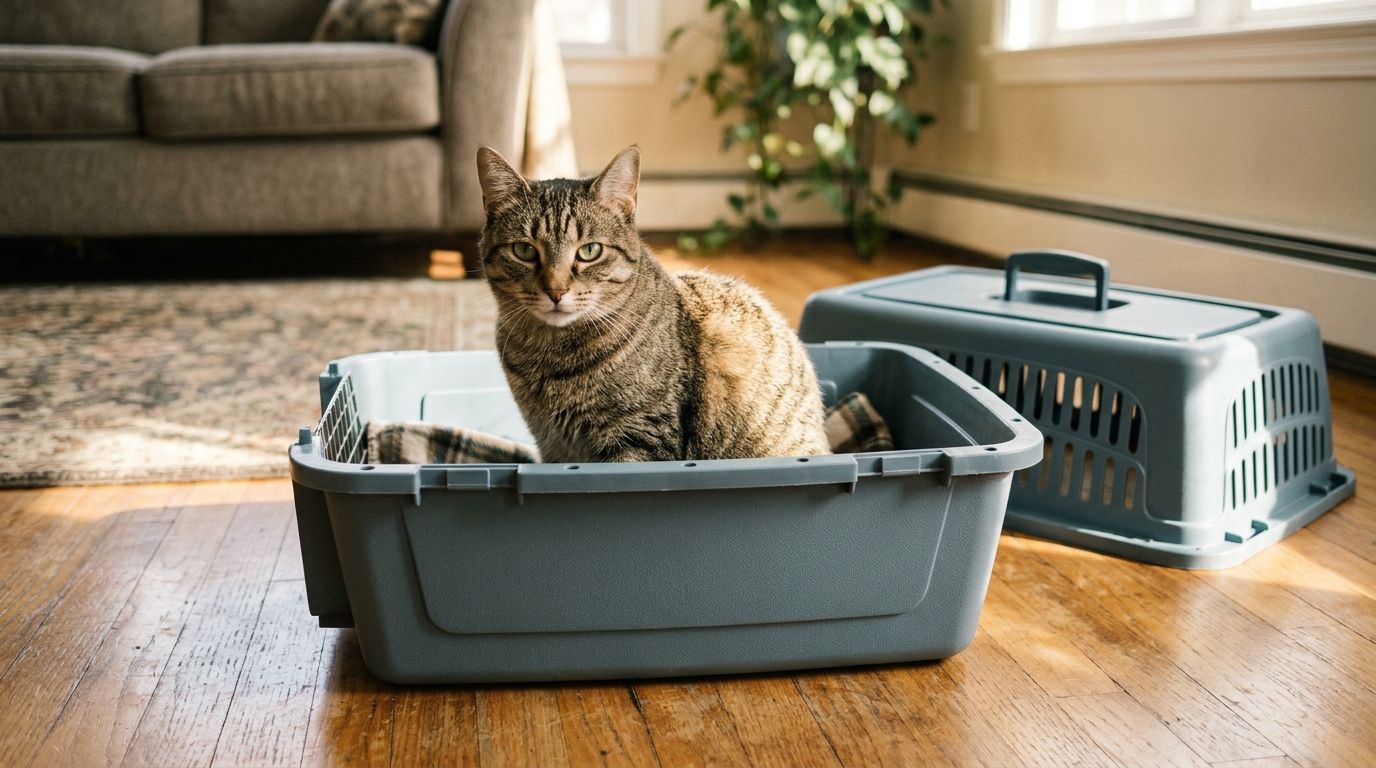
What size carrier?
Three measurements of your cat, standing. The rule comes from the air travel rules for pet containers; it is a good floor for any carrier.
| Nose to tail base, floor to elbow | Inside length at least |
|---|---|
| 16 in and 4 in | 18 in (46 cm) |
| 18 in and 5 in | 20.5 in (52 cm) |
| 20 in and 6 in | 23 in (58 cm) |
Inside height: at least your cat's standing height. Then check that it can stand, turn around and lie down.
What to look for when you buy
- Hard sides and a solid floor, so the carrier keeps its shape with the cat inside.
- A top that unclips and lifts off, plus a front door.
- Room for a folded towel that smells of home.
Before the trip
Leave the carrier open in a room your cat likes, with a blanket inside and the odd treat. A cat that naps in its carrier on ordinary days walks in on the day of the vet visit. Carry it level, close to your body, and set it on the car floor behind a front seat rather than on a seat where it can slide.
Good to know
- A carrier should be big enough for the cat to stand up, turn around and lie down comfortably.1,2,3
- Air travel rules size a pet container from the animal: nose to base of tail plus half the floor-to-elbow height for the inside length, and at least the animal's standing height for the inside height.4,5
- A sturdy hard carrier is preferred: soft fabric ones can collapse and cardboard ones are flimsy.1,6,7,8
- For vet visits, pick a carrier whose top comes off, so a scared cat can stay in the bottom half to be examined.2,6,7,9
- Leave the carrier out at home where your cat spends time; getting used to it can take days or weeks.1,2,7,9
- Do not carry the carrier by the handle alone or let it swing: support it from underneath or hold it close.2,6
- In the car, keep your cat in its carrier and secure the carrier, ideally on the floor behind a front seat.2,6,10
How we checked this page
Checked on October 20, 2026. We kept a fact only when two independent publishers agree, and each one is numbered to its sources below. Where sources give different numbers, we keep only what they share. We never write a price. This page was written with an AI assistant and checked against the sources below.
Sources
- How To Get Your Cat In A Carrier, PDSA
- Helping your cat cope with veterinary visits (Colette Kase, 2026), AAHA
- Guidance for passengers traveling with their dog or cat in the cabin, IATA
- Pet container requirements, IATA
- Air Travel Container Requirements (Heathrow Animal Reception Centre), City of London Corporation
- Taking your cat to the veterinary clinic: a guide for cat carers (2022), International Cat Care and ISFM
- Getting Your Cat to the Veterinarian, AAFP and ISFM
- Choosing and Using a Cat Carrier, Cats Protection
- Preparing your cat for a trip to the veterinarian, VCA Animal Hospitals
- 2025 Transportation of Cats in Motor Vehicles Position Statement, AAFP and ISFM